tundra ecology
High-latitude and alpine regions are warming more than three times as rapidly as the globe does on average. This puts enormous pressure on their organisms which are uniquely adapted to endure cold and harsh conditions. Through my research, I hope to contribute to a better understanding of environmental variation across cold treeless ecosystems and how even small-statured plants are utilising or actively altering their environment. I am also interested in how this variation feeds back onto ecosystem processes, like litter decomposition and nutrient cycling, as well as community composition and species ranges.
Microhabitats under alpine warming
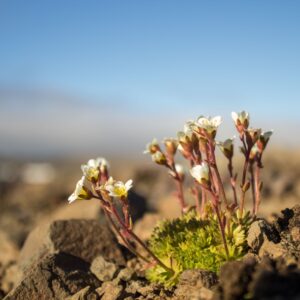
The diversity of specialised plants in high-mountain areas is at risk under the accelerating biodiversity and climate crises. Locally, heterogeneous microclimatic conditions can create thermally distinct microhabitats within mountain landscapes. However, where and how extensive such microhabitats are located and to what degree they could support the alpine flora through periods of macroclimate warming is still unknown, due to a lack of plant-relevant temperature data across time and space. Mechanistic microclimate models could help to obtain long-term, fine-scale soil temperature maps. The resulting maps will enable us to identify the extent of alpine microhabitats across the European Alps, and to assess how effective these areas have been for supporting the specific diversity of alpine plants.
Vegetation effects on tundra microclimate
In the absence of trees, shrubs constitute the major vegetative structures in tundra and are seen to spread in many parts of the Arctic in response to rapid warming. Through their canopies, shrubs can alter microclimatic conditions on different scales, which will have important consequences for other organisms in the fragile ecosystem. For 90 stratified-randomly placed plots in Western Greenland, we showed that higher cover by shrub vegetation, but also bryophytes, can cause locally cooler microclimatic conditions, particularly in the soil. Integrating such local measurements of microclimate and vegetation structure with remotely sensed indices could facilitate fine-scale spatial and temporal predictions of microclimatic conditions in tundra environments.
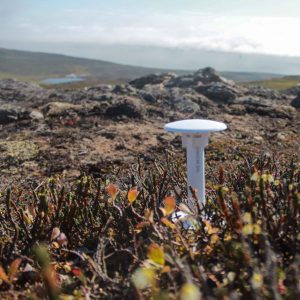
We also assessed the consequences of these microclimatic effects of tundra vegetation on decomposition rates, using the Tea Bag Index. Interestingly, we did not find a connection between microenvironmental conditions and decomposition. This indicates that variation in other local factors, such as microbial communities, might override the effects of microclimate on carbon cycling.
Factors explaining the abundance of different tundra shrub species
We are observing expansion of tundra shrub vegetation in many regions across the warming Arctic, but the underlying reasons are largely unclear. This is partly because many studies have investigated only few species and/or variable explaining the species’ abundance at a time. Also, we are missing a framework to integrate biotic interactions into these concepts, as they represent an important determinant of plant community composition.
To achieve this, we used vegetation abundance data from south-western Greenland to develop a framework based on functional traits of shrub species which builds upon species’ resource use characteristics. This helped explain relationships between species’ abundance and biotic interactions. However, it could not explain the importance of abiotic variables, particularly annual air temperature variability, for species abundances. Generally, species responded highly individualistically to environmental variation.

The necessity to include the variable species-specific responses will make predictions of future developments of tundra vegetation challenging, but our concept for assessing biotic interactions from functional traits might at least represent a promising step forward.
>> von Oppen et al. (2021) Journal of Vegetation Science [full text]
Leaf litter decomposition across alpine and arctic tundra
Decomposition of leaf litter is an essential part of the global carbon cycle and hence highly relevant in the light of global warming. However, we do not yet fully understand the relative influence of factors like temperature, soil conditions, or litter composition. Burying standard teabags down into the soil has emerged as a standardised method to obtain more insights on this question across environments.
For my Masters, I used this method on high-alpine mountain summits in Switzerland, which provide considerable small-scale variation in temperatures and soil conditions between their different aspects, and thus an ideal setting to study the effects of variation in abiotic environments on ecological processes. Summer decomposition rates were highly dependent on litter identity, and tea was a good proxy for local litter. Surprisingly, substantial variation in temperature between aspects was not reflected in decomposition patterns, suggesting that changes in community composition, and thus litter quality, might be more influential for alpine nutrient cycling than changes in abiotic factors themselves. As part of my PhD, I conducted a similar study, this time covering gradients of microclimate, topography, vegetation and soil composition across an Arctic tundra landscape. Again, however, environmental variation did not explain differences in decomposition, suggesting that other factors controlled decomposers at our sites.
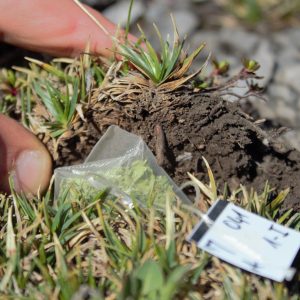
My MSc study was part of a global-scale, cross-biome, as well as a tundra-wide research network. Both confirmed the importance of litter identity. The effect of climate varied between biomes, but for the tundra, it looks like litter type really drives differences in decomposition.
Root dynamics along a subarctic elevation gradient
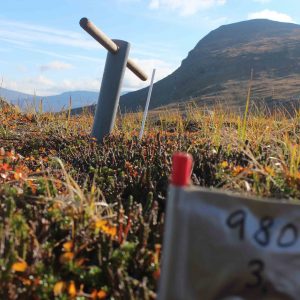
In a field course during my exchange semester in Northern Sweden, we investigated root morphological changes along an elevational gradient. Roots hold the large majority of plant biomass in tundra ecosystems, and changes in root structure along the gradient could potentially predict changes with ongoing climatic warming, as well as indicate future alterations of biomass turnover and carbon cycling.
We found high morphological variation within the belowground organs despite overall unchanged above- vs belowground allocation. Indirect effects of warming, such as changes in plant communities, rather than direct temperature effects, could therefore largely impact carbon cycling dynamics in the tundra.
>> Blume-Werry et al. (2018) Journal of Vegetation Science [full text]